For most Florida renters, no. Starting January 1, 2027, Florida's homestead exemption from non-school property taxes rises to up to $150,000, then $250,000 in 2028. The larger amount depends on having a permanent Florida residence by December 31, 2026, not on owning a home by then. You still must own and live in the home on January 1 and apply by March 1.
What changes in Florida's homestead exemption in 2027?
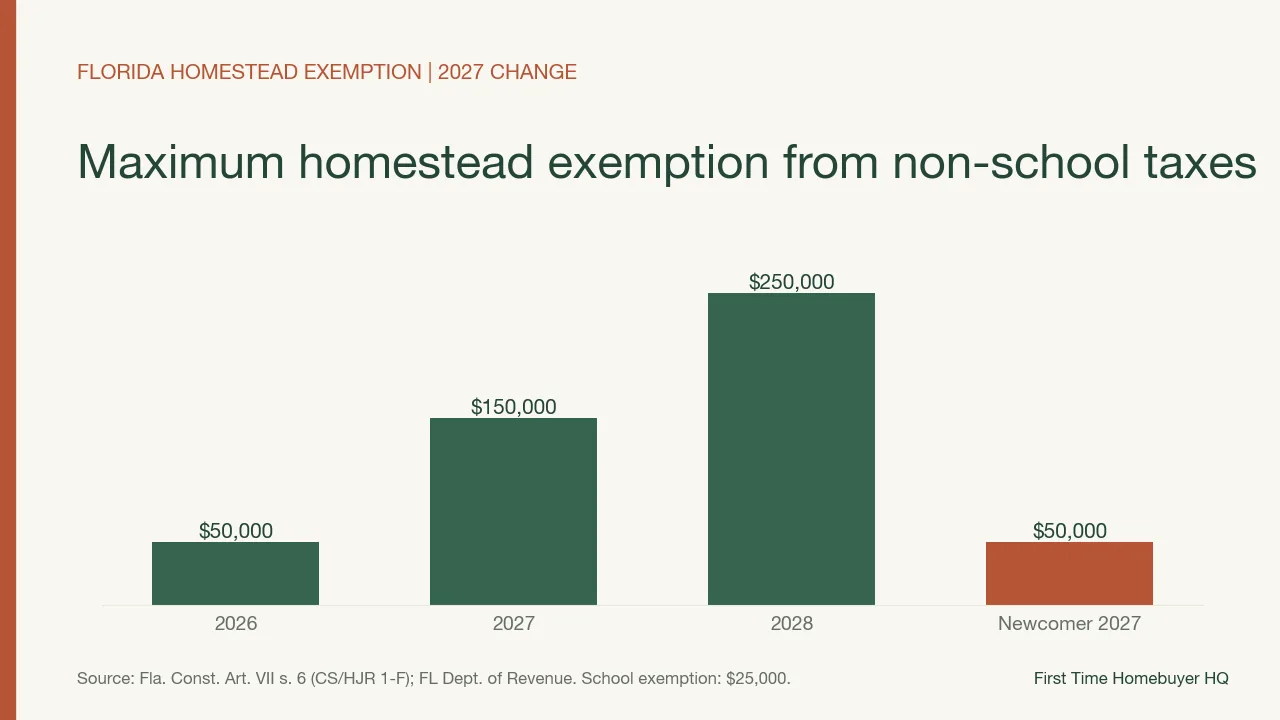
Florida voters approved CS/HJR 1-F in November 2026, and it takes effect January 1, 2027. The homestead exemption from non-school property taxes rises to up to $150,000 of assessed value in 2027 and $250,000 in 2028, with inflation adjustments starting in 2029. The school-tax exemption stays at $25,000.
Before the change, the Florida Department of Revenue described the homestead exemption as reducing taxable value by as much as $50,000. The amendment also lowers the yearly assessment cap on non-homestead property, such as rentals and second homes, from 10 percent to 5 percent for non-school levies. The Save Our Homes limit on homestead assessments, the lower of 3 percent or inflation, remains in place.
Do you have to buy before December 31, 2026, to get the larger exemption?
Not if you already live in Florida. The larger amount goes to owners who maintained a permanent Florida residence as of December 31, 2026, including people who establish a homestead later, according to the Senate's bill summary. December 31 is a residency date, not a purchase deadline, so do not rush an offer just to beat it.
What if you move to Florida in 2027 or later?
Owners who had not maintained a permanent Florida residence as of December 31, 2026, start with a smaller non-school exemption of up to $50,000, adjusted for inflation beginning in 2028, plus the $25,000 school exemption. Beginning with their fifth year of exemption, they move up to the larger amount other homesteads receive.
Starting in 2030, a county or city may vote, by two-thirds of its governing body, to shorten that five-year wait for its own taxes if it finds a critical local need. Special districts may raise their exemptions by referendum. If you are relocating, ask the property appraiser in your county which amount applies before you budget for taxes.
When do you need to own the home and apply?
Florida law ties the exemption to January 1. You must hold title and make the home your permanent residence on that date, then file with the county property appraiser by March 1. Missing March 1 generally waives the exemption for that year, so a late-December closing and an early-January closing can lead to different first tax bills.
- Own the home and live in it by January 1, 2027: you can apply by March 1, 2027, for the 2027 tax year.
- Close on January 2, 2027, or later: your first exemption year is generally 2028, when the non-school amount is up to $250,000 for owners who qualify for the larger exemption.
- Moving in matters as much as closing. The home must be your permanent residence on January 1, not just a property you own.
State law allows late filing only in limited circumstances, so treat March 1 as firm. The state application form asks for Social Security numbers for you and any spouse, and an application missing them is incomplete.
Will your tax bill or mortgage payment drop right away?
Not automatically. The exemption lowers the assessed value that non-school levies tax, but millage rates and school taxes still apply. Florida also reassesses a home at just value as of January 1 after a sale, so your bill can differ from the seller's. Ask your lender which tax figure it used to set your escrow payment.
For example, if a homestead's assessed value stayed at $300,000, the 2027 rules would leave $150,000 taxable for non-school levies and $275,000 for school levies, before any other exemptions. In 2028, the non-school taxable amount would fall to $50,000. Multiply each figure by your area's millage rates to estimate the tax.
A recent tax bill on a home you are buying reflects the seller's exemptions and assessment history, not yours. Your county property appraiser's website may offer an estimate by address, which is a better starting point for your budget.
Frequently asked questions
Does the new exemption apply to school taxes?
No. The school-district exemption stays at $25,000 of assessed value. The increase to $150,000 in 2027 and $250,000 in 2028 applies only to levies other than school district levies.
I rent in Florida now. Do I lose the larger exemption if I buy in 2028?
Based on the amendment text and the Senate's summary, no. The larger amount depends on having a permanent Florida residence as of December 31, 2026, and covers people who establish a homestead later. Confirm your status with your county property appraiser when you apply.
Where do I apply for a Florida homestead exemption?
With the property appraiser in the county where the home is located. The deadline is March 1 for owners who held title and lived in the home as their permanent residence on January 1.
Is this article tax or legal advice?
No. It is general education based on the amendment text and state guidance as of November 25, 2026. County procedures for the new rules may still be developing, and your actual tax bill depends on your property, its assessment and local millage rates.
Official sources
- The Florida Senate: Florida Constitution, Article VII, Sections 4 and 6, and Article XII, Section 43 (opens in a new tab) Checked
- The Florida Senate: CS/HJR 1-F (2026F) bill summary: Save our Homes from Excessive Property Taxes (opens in a new tab) Checked
- The Florida Senate: CS/HJR 1-F (2026F) bill history and votes (opens in a new tab) Checked
- The Florida Senate: Section 196.011, Florida Statutes: annual application required for exemption (opens in a new tab) Checked
- The Florida Senate: Section 196.031, Florida Statutes: exemption of homesteads (opens in a new tab) Checked
- Florida Department of Revenue: Property tax exemptions for homeowners (opens in a new tab) Checked
- Florida Department of Revenue: Property Tax Information for First-Time Florida Homebuyers (PT-107) (opens in a new tab) Checked
Rates, deadlines, and rules can change after the checked date. Confirm current figures with the official source and your closing agent.